
来自星星的你
Chinese conservationist explores community-based wildlife protection in Kenya_我的网站

A |
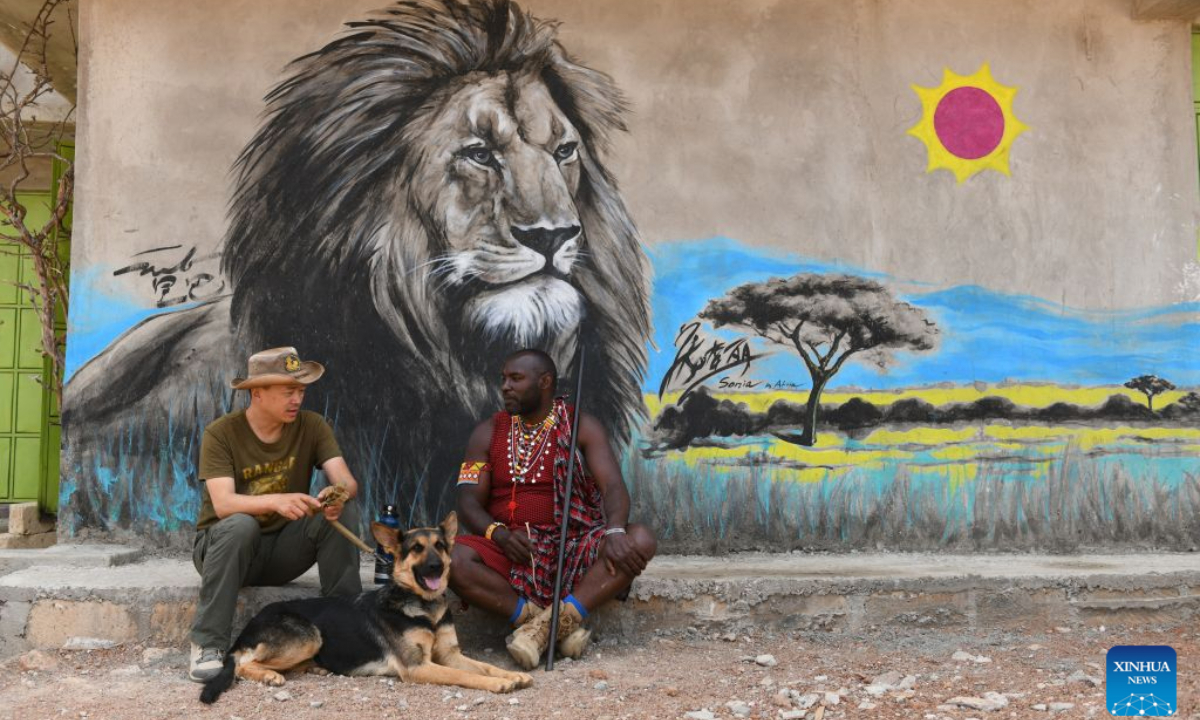
Among them is Chinese conservationist Zhuo Qiang, nicknamed "Simba," the Swahili word for lion. For him, this early-morning routine is driven by a broader mission to achieve human-wildlife coexistence.
In 2010, Zhuo left his job in China at the age of 37 and embarked on a less-traveled path: pursuing wildlife conservation in Kenya.
Without professional training in wildlife conservation, he found himself in a territory then dominated by Western organizations and local practitioners.
But Zhuo decided to stay. "I wanted to prove that Chinese people could also do wildlife conservation," he said.
Initially, Zhuo saw conservation largely through the lens of wildlife science: working in the field, studying animals and collecting data.
Living and working with Maasai communities changed that perspective. "The fate of wildlife was closely tied to the people sharing the same land," he said.
In the Maasai Mara ecosystem, livestock grazing is deeply connected to the livelihoods of pastoral communities. "If local people are asked to stop grazing but are given no alternative source of income, conservation cannot be sustainable," Zhuo said.
That principle laid the foundation for his work with the local community in establishing the Ol Kinyei Conservancy.
The area had suffered from prolonged overgrazing, with plants and the land itself deteriorating. Under the conservation model, local grazing land was leased and gradually restored, allowing vegetation to recover and creating a more suitable habitat for wildlife, said Zhuo.
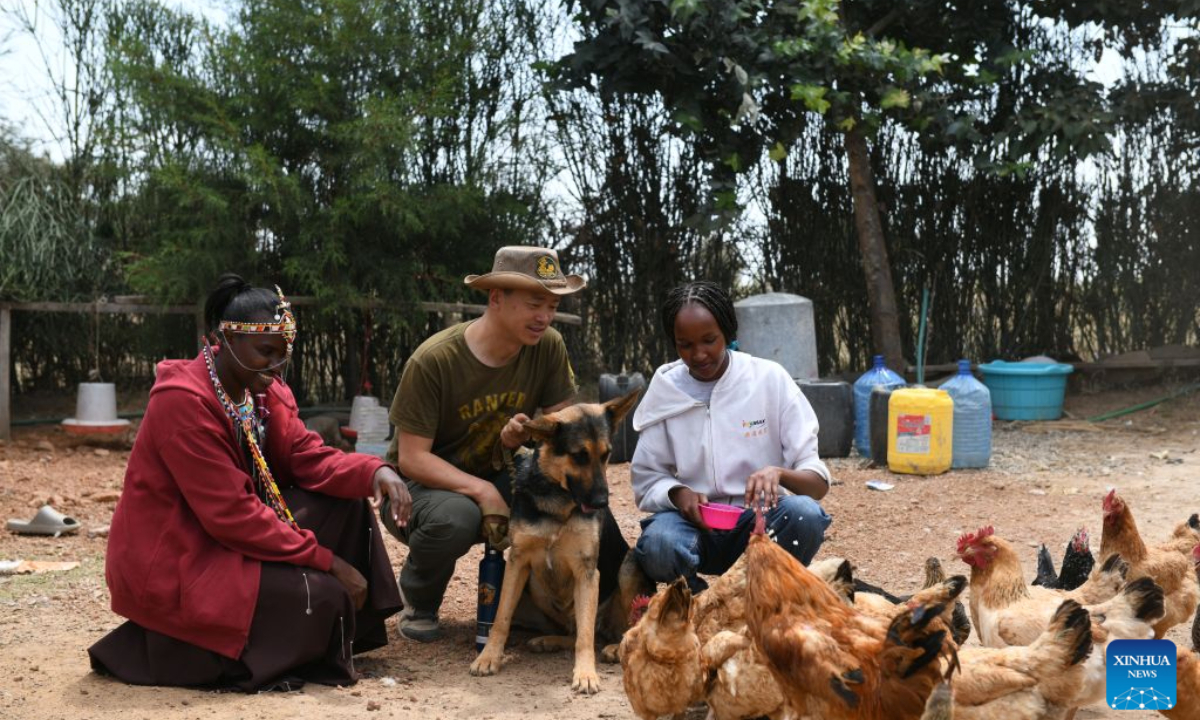
Meanwhile, households participating in the scheme receive land-rental income and have access to jobs such as wildlife rangers and tourism workers. Their average annual income has increased from around 500 U.S. dollars to about 3,700 dollars, according to Zhuo.
Some residents from surrounding communities also learned from the experience and brought the approach back to their own grazing areas.
Nowadays, 26 private conservancies have been established around the Maasai Mara National Reserve, covering about 1,600 square km, according to Zhuo.
He believes the network of community conservancies provides additional safe space for wildlife to move and survive, extending conservation efforts beyond the boundaries of a single national reserve and into surrounding communities.
Simon Msago, a Maasai community leader in Ngoswani, said Zhuo's work encouraged more residents to take an active role in conservation.
In the past, many residents saw few direct benefits from wildlife conservation and had limited awareness of its importance. Today, community members are increasingly willing to work as rangers and protect wildlife, creating an effective layer of protection around the conservancies, Msago said.
"Human-wildlife conflict cannot be solved simply through restrictions and prohibitions. The key is to create alternative sources of income so that residents can gain tangible benefits from conservation," Zhuo said.
"That is what makes community-based conservation sustainable -- allowing local people to become part of wildlife conservation rather than bystanders with no stake in it."
While continuing his work in the Maasai Mara, Zhuo has also sought to strengthen exchanges between China and Africa in wildlife conservation.
In recent years, he has visited more than 30 nature reserves and national parks in China, sharing his experiences of community-based conservation in Africa with Chinese counterparts.
"Conservation practices in China and Africa each have their own characteristics, and there is much that the two sides can learn from each other," he added.
。

B | 从车间分拣到街头配送,物流全链条“黑科技”上线 越来越多的快递,为何能越送越快? 在广州邮区中心,人形机器人灵活移动“目光”,俯身抓取快递分拣;在佛山街巷间,快递包裹、生鲜果品以及各类大件纷纷搭上无人配送车,往来穿梭于快递网点、社区驿站与沿街商户之间……随着国内邮政快递行业加速拥抱数字智能技术,各类自动化、数智化装备落地分拣车间、仓储枢纽全链条,推动快递流转跑出“加速度”。 近日,记者跟随国家邮政局“沿着快递看中国・智领未来”主题调研,走访多地邮政快递枢纽、末端网点与智慧仓配基地,实地探访科技如何重塑行业,为实体经济高质量发展注入强劲物流动能。

C | 分拣打开新空间 作为我国邮政业务量最大的邮区中心之一,广州邮区中心日均处理邮件700余万件。

D | 通过投用智能机械臂、无人叉车、具身智能机器人等新一代智能装备,广州邮区中心已实现从传统人工分拣向无人化、智能化作业的转型。 广州邮区中心江高邮件处理中心副主任何勇介绍,高峰时段,机械臂每小时可处理1200件邮件,把工人从重复枯燥的上料劳动中解放出来。不少一线员工的工作重心,已经从体力搬运转向设备巡检、异常件处置,岗位技术含量不断提升。 当快递业务量越来越大,如何争取更多的分拣空间,提高分拣效率?广州艮业科技有限公司给出了创新性的解决方案——“3D播种墙”。 “以往常规的交叉带分拣机是基于二维平面的,只有X轴和Y轴,我们通过增加一条Z轴,把平面变成了立体。”广州艮业科技有限公司创新事业中心总经理左文介绍,这样的设计更适用于医药、美妆、图书等订单碎片化、一个订单包含多个SKU(最小存货单位)的行业。例如,当消费者在一家美妆店下单时,通常货品量大且零碎,拣货压力大。

E | 投用“3D播种墙”后,只需将所有货品统一投入自动供件传送带,系统将自动完成商品分拣、投放。 据左文介绍,这套立体分拣系统集成了AI视觉识别和拣选算法等多项智能技术。

F | 大型号设备每小时能分拣8000件至2万件,分拣效率大约能提升5倍,占地面积减少约50%,准确率也大幅提高。 末端配送有了新帮手 在广东佛山南海区,圆通速递平洲北网点一片忙碌。快递员把扫描好的包裹一件件搬进一辆新石器无人车,关上车门后在手机APP上轻点“发车”,无人车随即启动,20分钟后稳稳停在驿站门口。驿站工作人员扫码开厢,取件上架。与此同时,无人车自动驶离,奔赴下一站。 这是无人车在佛山快递末端配送中的日常一幕。如今,类似的场景正在越来越多的快递网点和社区驿站之间上演。走出快递园区,在顺德的电动车门店、南海的蛋糕房、三水的生鲜市场,无人车正以更多样的方式,为这座制造业名城的末端配送提供助力。 从网点到3公里外的菜鸟驿站,途经3个红绿灯、1处减速带和1段窄巷。执行这条线路的新石器X6型无人车,搭载12个高清摄像头,能够自主应对各种路况,全程平稳顺畅。 “以前1000件快递起码得跑两趟才能拉完,小哥一天下来大半时间都耗在了来回路上。”网点经理欧阳朝阳回忆,过去末端短途转运占用了快递员大量时间,人力价值没能得到充分释放,“现在快递员省出来的时间,可以去揽件和送货上门,这些才是快递行业真正有价值的环节”。

G | 如果说快递场景里无人车跑的是定时定点的固定线路,那么在顺德陈村的爱玛电动车门店,无人车的运行则是另一套逻辑:按需使用,像“网约车”一样随叫随到。 “老板,我们门店急需两台新型号电动车和4块电池。”下午2点,店长吴朝养收到另一家门店的调货需求,随即在微信小程序上呼叫了一台无人车。5分钟后,一辆新石器无人车开到店门口。

H | 吴朝养扫码开厢,把两台电动车抬进车厢,确认目的地、锁厢、发车,无人车即刻出发。

I | 吴朝养用的这种服务模式叫RaaS,即“无人车即时配送服务”。“以前调货,要么自己开车跑,要么叫同城货运,成本高、效率低。

J | ”吴朝养算了一笔账:他的店做电动车销售和维修,配件型号多、库存散,门店之间调货是家常便饭,物流成本居高不下。如今手机上叫一辆无人车就行,门店半个月已下单80余单,调货物流费用下降60%。 数智仓储多点落地 近期,广州街头出现了一款特殊的丰巢智能柜,柜中不存放普通快件,专供智能设备维修配件周转。这款MRO智能云柜由广州平云小匠科技股份有限公司联合丰巢科技有限公司打造,精准破解智能设备运维行业现存痛点。 平云小匠副总经理许小敏介绍,该云仓体系依托售后大数据预判备件损耗,将常用配件前置布设至各地丰巢柜,报修后维修人员就近取件,备件等待时长缩减七成。

K | 库存不足时系统自动下发补货单,联动顺丰完成仓配转运入柜,解决智能设备规模化运营的可持续性难题。 在千里之外的福建泉州顺丰特步数智物流仓内,各类鞋服货品顺着自动化流水线流转,完成拣选、分拣、打包等全流程作业。上百台智能搬运机器人驮载着一箱箱货品,在密集的货架与输送线之间穿梭,交会时自动避让、有序通行。偌大的仓储车间里,只有机器人移动时发出的细碎沙沙声。 泉州顺丰特步物流数智仓负责人林文泉告诉记者,当下,鞋服行业线上电商、线下门店、批发经销、退换货等多类业务并行,商品海量、尺码款式繁杂、库存分散难统筹等问题,成为仓储运营的普遍痛点。 “今年1月,我们新投用了CTU(料箱转运)箱式立体库,配备6.7万个标准货位。

L | 整体吞吐能力可达每小时2637箱,涵盖货品入库、出库全流程作业。”林文泉介绍,在这套系统的加持下,上万平方米的仓储空间中,需要人工操作的仅有初步开箱、末尾复核打包等操作,料箱的取、放、搬运均由机器人在货架间游走完成,可高效应对日常及大促峰值订单压力。(工人日报 记者 姜雨晴)。
Current article:http://42vovk.gamajionghuanmuniuzhuanguchu.cyou/baz/9lrp.html
Published on:16:35:57